Hi,
I want steady 15v output from 3s lithium ion battery. Which step-up regulator is suitable for the purpose. I dont want voltage spikes to show on the output as this regulator has Pololu - 15V Step-Up Voltage Regulator U3V70F15 which may cause damage to the circuit.
Thanks,
Hello.
Are you referring to the voltage spikes mentioned under the “LC Voltage Spike” heading on the product page? If so, please note that the LC Voltage Spikes are on the input of the regulator, not the output.
Also, could you post more details about what you are trying to power? In particular, how much current do you expect your load to draw at 15V?
Brandon
Hi,
Yes, I was referring to the “LC Voltage Spike” section. The product page of U3V70F15 says that input higher than 15v will show in the output which could damage the circuit on the output.
I want to power Jetson Orin Nano which accepts input voltage between 9-20v. It will consume about 40w max.
Thanks,
Hi,
Since 9v is the minimum voltage needed, Is it suitable to use the following step down regulator?Pololu - 9V, 5A Step-Down Voltage Regulator D42V55F9
To clarify, the input voltage being passed through to the output when it is higher than the regulator’s intended output is a common behavior of step-up regulators in general; it is not unique to the U3V70F15 regulator. As noted in the “LC Voltage Spikes” section, in our test setup, we found that input voltages above 17 V caused voltage spikes in excess of 20V. The maximum charge of a 3S Lithium Ion battery is 12.6V, so it seems unlikely that you would get spikes above 20V (unless you are doing something like using extremely long power leads).
I am not very familiar with the Jetson Orin Nano, but from a quick Internet search, it looks like 9V is the absolute minimum operating voltage; if that is the case, I recommend giving it a comfortable margin of a couple volts or so. Since your battery voltage is within the operating voltage range of the Jetson Orin Nano, you could probably power it directly from your battery. Is there a particular reason you wanted to use a regulator?
Brandon
Hi,
I wanted to use a regulator because there are motors connected to the same battery which may cause noise in the circuit.
For my use case 25w output power is acceptable.
I came across this step-up/step-down regulator S13V25F12 which accepts input between 2.8v-22v and outputs 12v.
It has input under-voltage lockout and output over-voltage protection.
Does “output over-voltage protection” mean that when the regulator input is above 22v the output will be 12v or will it shutdown the regulator output or will it pass through the input voltage to the output.
Hello.
If 2A is enough for your application, then that Step-Up/Step-Down Voltage Regulator S13V25F12 should be a better choice for keeping a steady 12V as your battery voltage changes. It also has some electrolytic capacitors on it, which will help with spikes.
The S13V25F12 regulator will hold the output voltage at 12V for any input in its operating range. Applying more than 22V (the maximum operating voltage) can damage the board. However, if the input voltage does spike over 22V, the regulator should still output 12V as long as it is not damaged.
Brandon
Brandon’s point about the electrolytic caps on the S13V25F12 is worth noting for the motor noise concern; bulk capacitance on the regulator input side can help absorb some of the transients the motors generate, though it may still be worth adding a separate input cap close to the regulator if the battery leads are long. For the over-voltage question, the distinction matters: output over-voltage protection is about the regulator’s own output, not input passing through, so a spike above 22V risks damaging the board rather than being regulated. Keeping 3S battery voltage well below that ceiling seems wise.
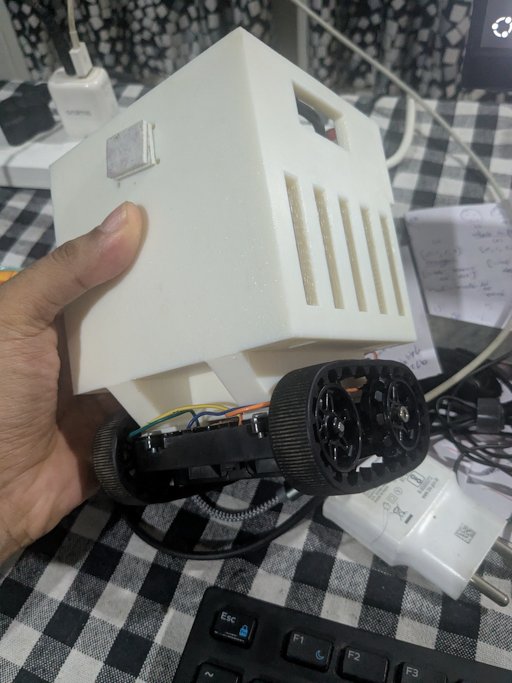
Specifically i am using a pair of Pololu 12V HPCB micro metal gearmotor 380:1 with encoder together with zumo chassis and is driven using TB6612FNG motor driver. I want to apply short brakes to the motor with the total weight of the setup being approx. 1kg. The power source is a 3S2P lithium ion battery pack. The host computer (Jetson orin nano) is also powered by the same battery source via S13V25F12 voltage regulator.